

& VETERANS

ROTC students honor World War II pilot’s memory
That’s what happened last spring when the UNH AFROTC Color Guard was asked to take part in a long-overdue military tribute.
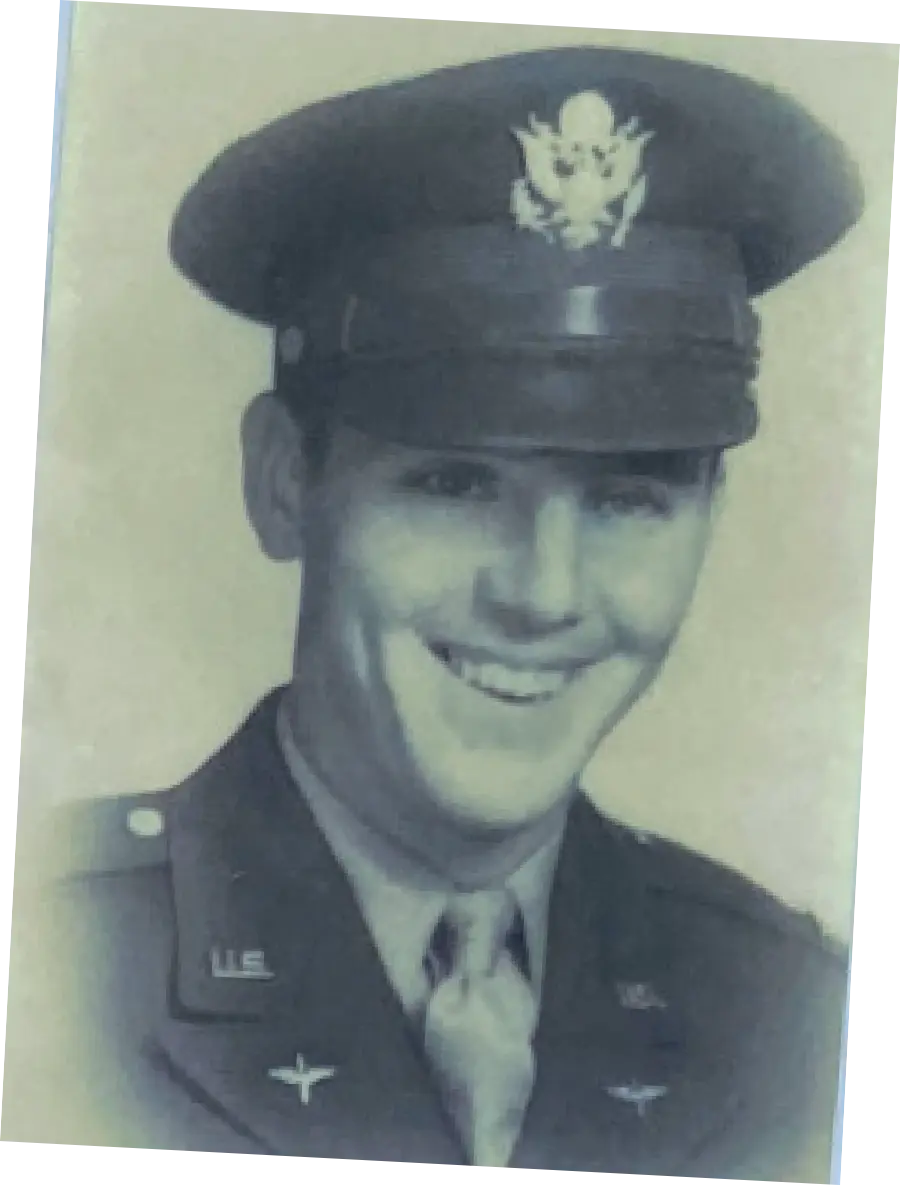
In February 1945, U.S. Army Air Force First Lt. Austin “Ozzie” Keith was killed on his way to a bombing mission to Tokyo during World War II. Originally from Maine, Keith’s body was never recovered, and eventually his family settled in the Lakes Region of New Hampshire.
That’s where, in Laconia’s Bayside Cemetery, some 80 years after his death, Keith was recognized with a plaque at his family’s plot, where his mother, father and sister are buried.
The honor was the culmination of an effort by Chichester resident David Bergquist, who had learned about Keith after a research visit to the Bangor (Maine) Public Library. There, he saw Keith’s name in the library’s “Book of Honor” of local men killed in World War II. The more Bergquist read, the more interested he became; in 2011, he released a book about Keith titled “Prelude to Courage: An Air Warrior’s Journey of Faith.”
He learned from Veterans Affairs that because Keith’s body was never recovered, he was eligible for a memorial plaque for personnel missing in action. Bergquist, knowing of the family’s move to Laconia after Keith’s death, thought their family plot was the best place to ceremonially reunite the pilot with his family. Lakes Region veterans and the Wilkins-Smith American Legion Post 1 in Laconia got involved to organize last spring’s memorial tribute event.
That’s where UNH became involved, called upon to represent the state’s flagship university in this solemn celebration.
Capt. Panida Theerathampitak, assistant professor of aerospace studies and recruiting officer with UNH’s Air Force ROTC cadre, organized the UNH students’ involvement.
“It’s an honor, really, to have our Air Force ROTC students help remember a fellow service member from the past. They don’t get a lot of these opportunities, so when they arise, it gives them a chance not only to practice what they do, but also to honor those who have fallen, especially to honor someone who was from the New England area; it means a lot.”
The event included prayer, comments and information about Keith and his service, a dedication of the memorial marker, a gun salute and performances of the “Star-Spangled Banner” and taps.
UNH Cadet Jonathan Taube ’25, a homeland security major, said being at the cemetery that day “has a lot to do with honoring our heritage and where we came from.
“It’s important to do things like this to ensure that we’re not just going on to serve our nation; we’re here to serve our local community as well.”