

MARTY HALL ’60

“We were just big buds, from our childhood on,” Marty once said. “We never got into any trouble, but we ran all over the place.”
Linda was a varsity skier and field hockey player at UNH. After graduation, she became a teacher, coach and eventually a leading expert in cardiac and pulmonary rehabilitation. When she died in 2016, Marty and his wife, Kathy ’66, created a fund for UNH student-athletes in Linda’s memory.
“Linda and I both felt that we left here with all the tools we needed for our professional lives. We both felt very beholden to the school, and we talked about that quite a bit,” he said at the time.
But that gift to UNH isn’t Marty’s true claim to fame — that lies in his many gifts to the world of skiing.
Marty Hall, a standout competitor for the Wildcats before becoming a pioneering coach who helped elevate U.S. cross-country skiing to the world stage, died on February 25, 2025.
During his career, he served as the first full-time cross-country skiing coach for the U.S. Ski Team, leading the program to its first Olympic medal in 1976, and as chief coach for Cross Country Canada. Hall revolutionized training methodologies, trail grooming and race formats, leaving an enduring impact on the sport. He was also a driving force behind the modernization of Nordic skiing, advancing equipment, waxing techniques and spectator-friendly race formats.
He and Kathy were passionate supporters of UNH skiing and various ski organizations. Most recently, they had been spearheading support for the UNH SKIplex, a renovation of the locker rooms and team spaces for the UNH Nordic and Alpine ski teams. They have been the visionary minds behind the SKIplex and supported the project through their advocacy and philanthropy.
In a 2018 interview with UNH ahead of his induction into the U.S. Ski & Snowboard Hall of Fame, he shared an anecdote that would prove prophetic. Several years before, Hall recalled, his wife came home from a book club gathering with a writing exercise and a challenge to him: He had 20 seconds and five words to write his epitaph.
“I did it my way,” Marty answered, with plenty of seconds to spare.
JOSEPH MONNINGER ’82G
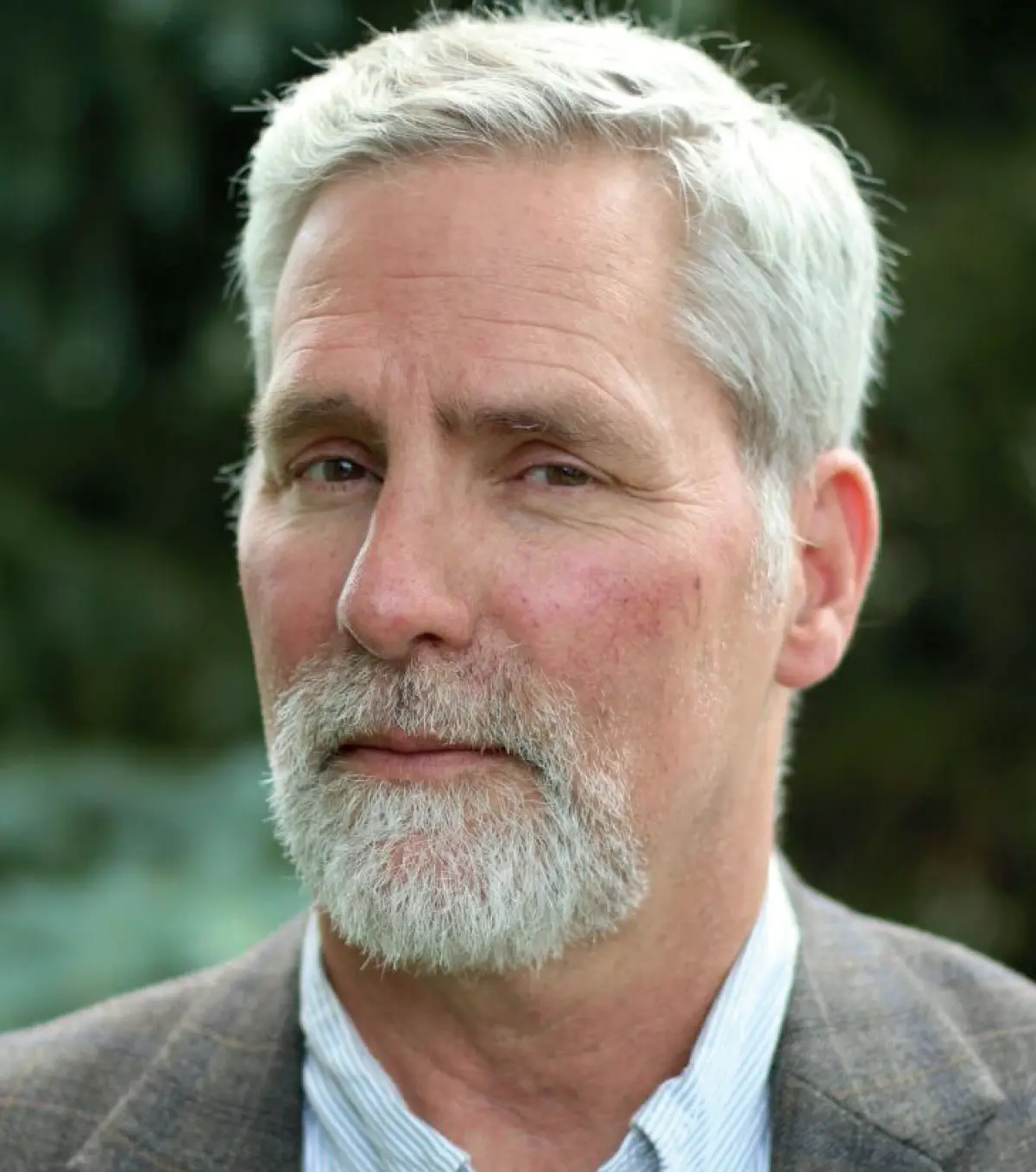
After more than three decades of teaching students at Plymouth State University, it seemed that author Joseph Monninger wanted to continue sharing the lessons he was learning throughout the last years of his life. First, in “Goodbye to Clocks Ticking,” the 2023 book he wrote to chronicle the year after his terminal lung cancer diagnosis, and then, finally, in an essay he penned about his final days on the Maine coast.
Monninger, who authored more than 30 books in his writing career, died January 1, 2025. His final essay appeared in the February edition of Downeast Magazine.
“… It is understood now that I am becoming mist, the ghost of my youthful life, an old man who swims in the sea and rivers to bathe, a rough birch cane in my left hand to steady myself and sometimes to help me stand. I have chosen to live this way, to live near the sea without running water, to surround myself with simple beauty. My days have been emptied of all fanfare and complication. I play chess on the computer, read great gulps of books, nap, and study the weather both in the sky and in my chest.”
In addition to his novels, Monninger’s writing also appeared in publications such as Scientific American, the Boston Globe and Sports Illustrated. He earned his MFA here at UNH, and was a visiting writer in the English Department. As of presstime, his son, Justin, shared that Amazon Prime would be releasing a movie based on Monninger’s 2017 novel, “The Map That Leads to You” this summer. During a 2013 interview for a New Hampshire State Library blog, Monninger shared the moment when he first began thinking of himself as a writer. He was in his mid-20s at the time, working as a Peace Corps volunteer in West Africa. “I received a telegram from my dad saying I had finished third in a Redbook short story contest for writers under the age of 25. This was about 1977. I remember feeling strange afterward, knowing that some secret part of my interior life — the desire to be a writer — had come a little bit true.”
Monninger’s full final essay from Downeast Magazine can be found at downeast.com/features/joseph-monninger-final-days-on-the-maine-coast/.

BERRIEN MOORE III
He was recognized by UNH in 1992 for research excellence and was named University Distinguished Professor in 1997. From 1987 to 2008, Moore served as the director of the Institute for the Study of Earth, Oceans and Space at UNH. During his period at UNH, Moore also held numerous visiting scientist positions.
According to his New York Times obituary, when Moore was a young professor specializing in applied mathematics, “few if any of his academic peers had tried to apply mathematics to studying the Earth’s natural systems. Colleagues at the time remember Dr. Moore bucking at the sensibilities of the field he was trained in.”
In February 2008, Moore left UNH to serve as the founding executive director of Climate Central, a think tank dedicated to providing objective and understandable information about climate change.
Two years later, Moore joined the University of Oklahoma where he held the Chesapeake Energy Corporation Chair in Climate Studies. He also served as dean of the College of Atmospheric and Geographic Sciences, director of the National Weather Center and vice president for Weather and Climate Programs.
He has published extensively on the global carbon cycle, biogeochemistry, remote sensing, environmental and space policy, and mathematics, and from 1984 to 1988, served as a committee member of NASA’s senior science advisory committee, the Space and Earth Science Advisory Committee, which published its report in 1986: The Crisis in Space and Earth Science: A Time for a New Commitment. In 1988, he assumed Chair of SESAC and served until 1992. He concurrently served as a member of the NASA Advisory Council.
According to the Times, Moore’s early career came during an era when the relationship between human activity and climate change was little understood. As the article states: “Dr. Moore set about illuminating the links between different research disciplines, which helped form the backbone of the scientific world’s widely accepted consensus on climate change through data analysis.”

JANET BRIGGS
Briggs, also credited as one of the driving forces behind the development of the Olympic sports of Eventing and Dressage in New England, died November 20, 2024, after battling cancer.
As a youngster, she grew up in a family that moved often due to her father’s military service in the U.S. Air Force. She graduated from Middleborough High School in Massachusetts, and earned an animal science degree from the University of Massachusetts. It was there she met her husband, Douglas (they were married until his passing in 2023); the two raised a daughter and a son together.
In 1976, Janet and Doug purchased a 1770s farm in Northwood, bringing it back to life from abandoned vacancy, eventually turning it into Meadow Farm Bed & Breakfast in 1981. As her obituary notes, guests may recall three-course breakfasts with “blueberry pancakes, all made with eggs she gathered, fruit she picked and of course real New Hampshire maple syrup. She said goodbye to her last guests only a few months ago.”