

Developing community-based seafood production
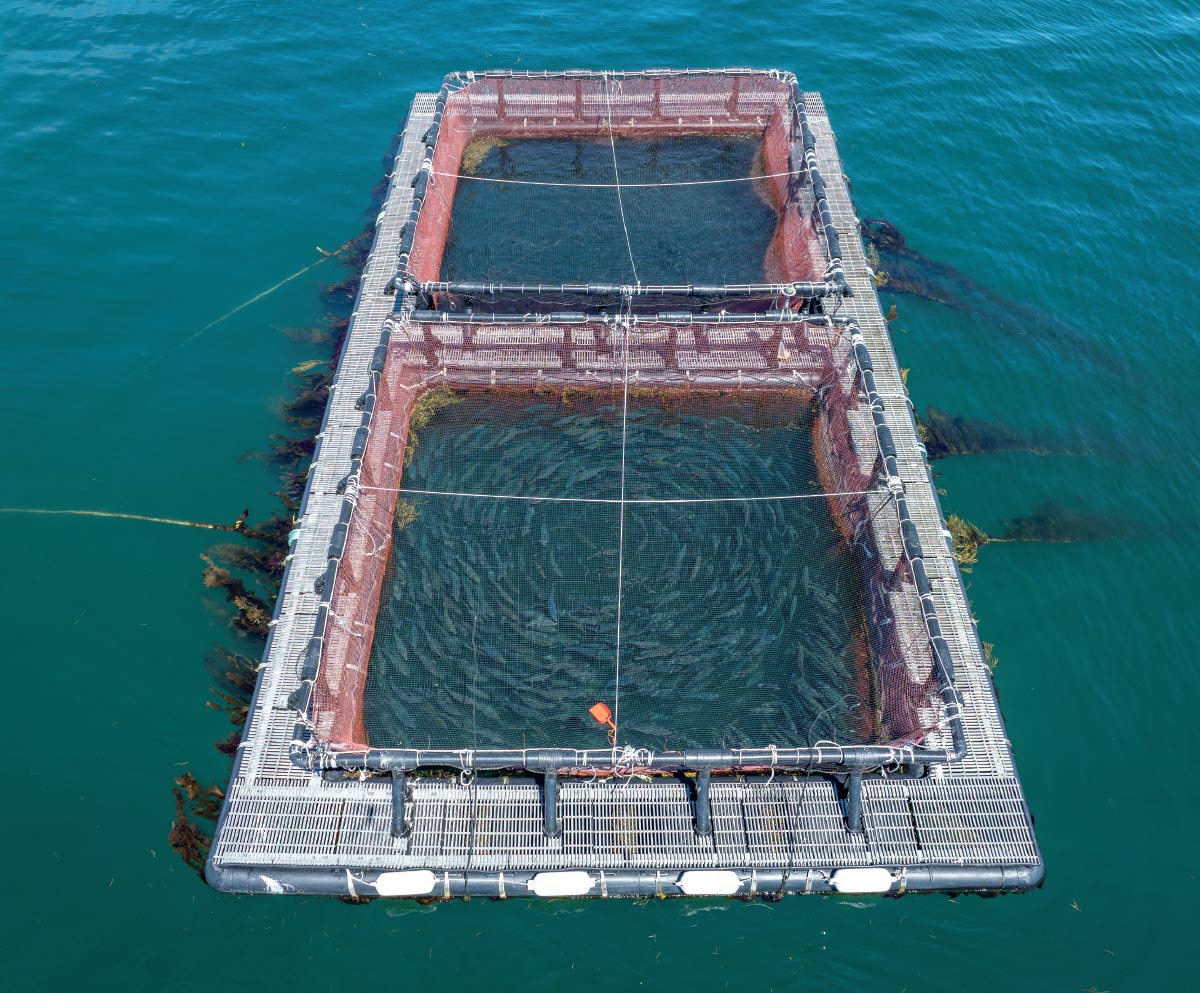
Thanks to a $3 million gift from the Emily Landecker Foundation, the center’s new global educational program will focus on community-based seafood production that is aligned with cultures around the world. The program will bring together UNH expertise from marine science, ocean engineering, business and sustainability to help address food availability for future generations.
“We have deep concerns about climate change, the world we live in and how this could impact food availability for future generations,” said representatives from the Emily Landecker Foundation. “We live in New England so we are keenly aware of the warming of the Gulf of Maine and how it is affecting, and will continue to affect, local fisheries and other sources of food from the ocean. We have continued to be impressed by the work being done at the University of New Hampshire and their proven excellence in marine sciences, and we are confident that they can help make a difference by arming people with the knowledge to create local sustainable seafood programs in New England and around the world.”
The history of the center, and its connection to the Landecker Foundation, began five years ago with a $5 million founding gift. The center is a joint effort between the UNH College of Engineering and Physical Sciences and the UNH School of Marine Science and Ocean Engineering; it seeks to be a hub at the nexus of food security, climate change adaptation and ecological protection.
The center’s work comes amid a revival in New Hampshire’s aquaculture industry, powered by cutting-edge research and growing consumer demand for sustainable seafood. The sector has become increasingly important to the region, contributing more than $5.5 million to the state’s economy and supporting more than 250 jobs.
When David Fredriksson, ocean engineering professor, was named the center’s director in 2022, one of his aims was to shift the way we use ocean resources — globally and locally.
“The time is now to change the paradigm of ocean resource utilization, especially from fisheries and aquaculture. We must take a technical but holistic design approach to develop sustainable seafood systems that enhance both communities and ecosystems,” he said.
Proof of that local impact was seen this spring, when the center donated close to 60 pounds of smoked steelhead trout to Gather, a nonprofit that helps feed those experiencing hunger in New Hampshire’s Seacoast and southern Maine.
The steelhead trout is raised and harvested in UNH’s integrated multi-trophic aquaculture (IMTA) Aquafort, a self-contained aquaculture system that allows multiple species to grow at the same time within a single floating structure. Along with the steelhead trout, UNH also grows blue mussels and sugar kelp, which filter waste from the trout operation, so as not to negatively affect the ecosystem, or disturb the harvest of others who make their living from their own fresh catches in the area. The trout is harvested throughout the summer and is available fresh at several local fish markets during the season. A portion of the fish is smoked by the Boston Smoked Fish Company, packaged in a vacuum-sealed pouch and frozen.
“We’re really excited to see our locally grown fish make a difference in solving the problem of hunger through the good work being done at Gather,” said Fredriksson. “We feel it is an important part of our operation to donate high-quality, locally sourced food that is conscientiously cultivated while we work toward developing a sustainable local aquaculture system.”
UNH has made several donations of the smoked fish to Gather so far. Some were made available to Gather’s members through their pantry and mobile markets that travel into communities to provide much-needed food. The other donations were transformed into nutritious meals and distributed to members.
More good news: you can get your own. If you live nearby and can pick up on campus, you can order the UNH steelhead trout here: https://unh-usnh.nbsstore.net/center-for-sustainable-seafood-systems.