

Reaching new heights
The idea became a reality this spring, when the ultralight electric aircraft they conceived, designed and built as a team, with support from faculty advisor Ivaylo Nedyalkov, a mechanical engineering professor, was launched.
“This team has set the bar exceptionally high. They’ve shown that with the right mix of vision, drive, discipline and teamwork, students can take on challenges that many would consider out of reach,” Nedyalkov said.
For the students — Marcus Herold ’25, Ethan Tillinghast ’25, Seth Chartier ’25, Philip Mather ’25 and Brian Viscido ’25 — watching the first test flight take off and land safely was an energizing culmination of months of hard work and long hours. Though they had to view the flight from a distance for safety purposes, little could have changed the gravity of the moment.
“We were more than a quarter mile away from it, so it was kind of hard to see what was happening, but you could tell it got off the ground. It was pretty unreal,” says Herold, the team lead. “It’s been a long-term goal of mine — I’ve always wanted to build a full airplane — so to see it happen was quite awesome.”
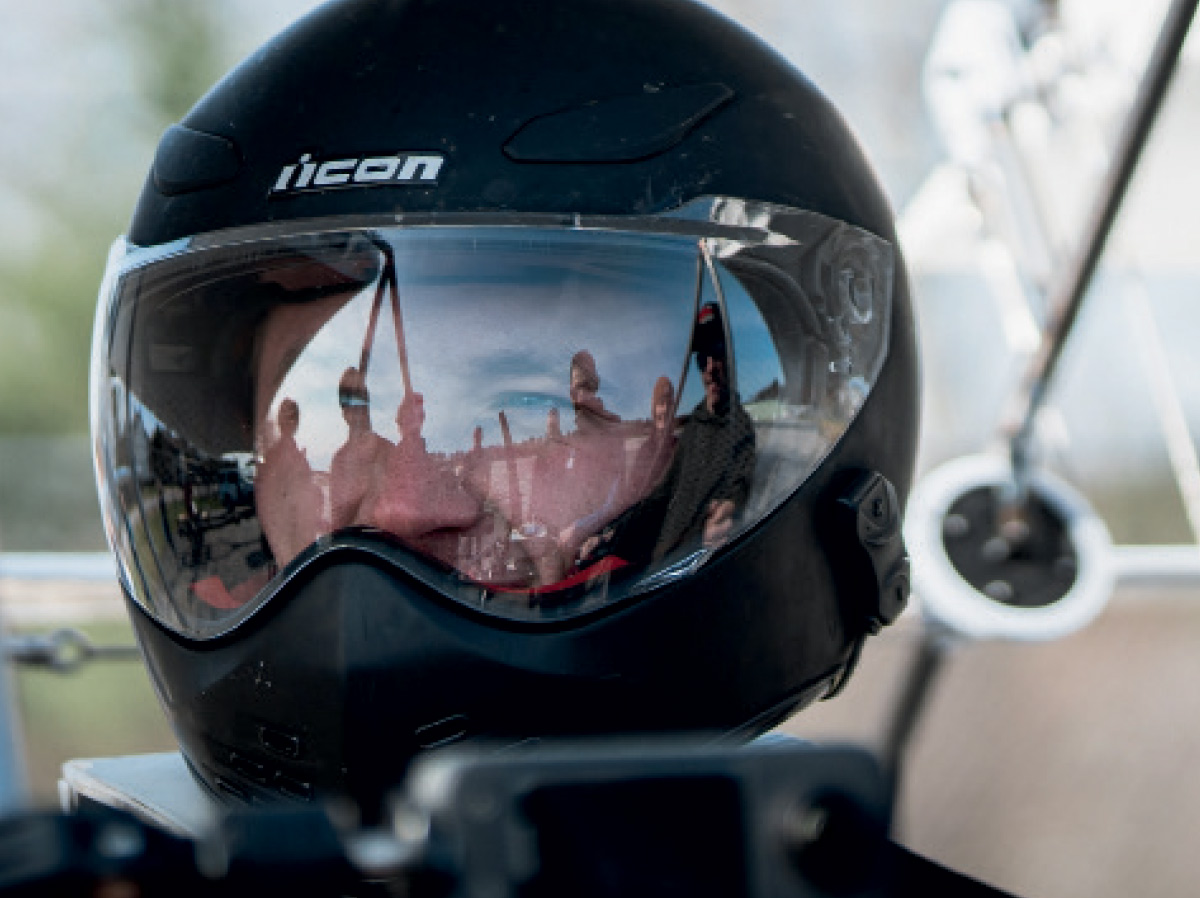
The aircraft was flown by Zach Yeaton ’26, a fellow student who has his pilot’s license. Yeaton guided the ultralight down the runway before lifting off, getting about 10 feet off the ground and flying for just over 10 seconds — the height and duration parameters proposed for the flight due to safety considerations — before touching down safely.
After the team pitched the idea last spring and Nedyalkov signed off, the members dove into the process by composing a detailed proposal before building a functional quarter-scale model, “making a strong case that this wasn’t just an ambitious idea — it was a realistic and achievable goal,” Nedyalkov says.
Nedyalkov remains in awe of what the students were able to accomplish.
“I can’t overstate how impressive this project is. … This is the kind of hands-on experience that defines a top-tier engineering program and shapes the engineering leaders of tomorrow,” he says. “We’re fortunate to have students with this level of talent and ambition, and I’m proud that UNH provides an environment where even the sky isn’t the limit.”