

Fifty years on, talk of war, peace

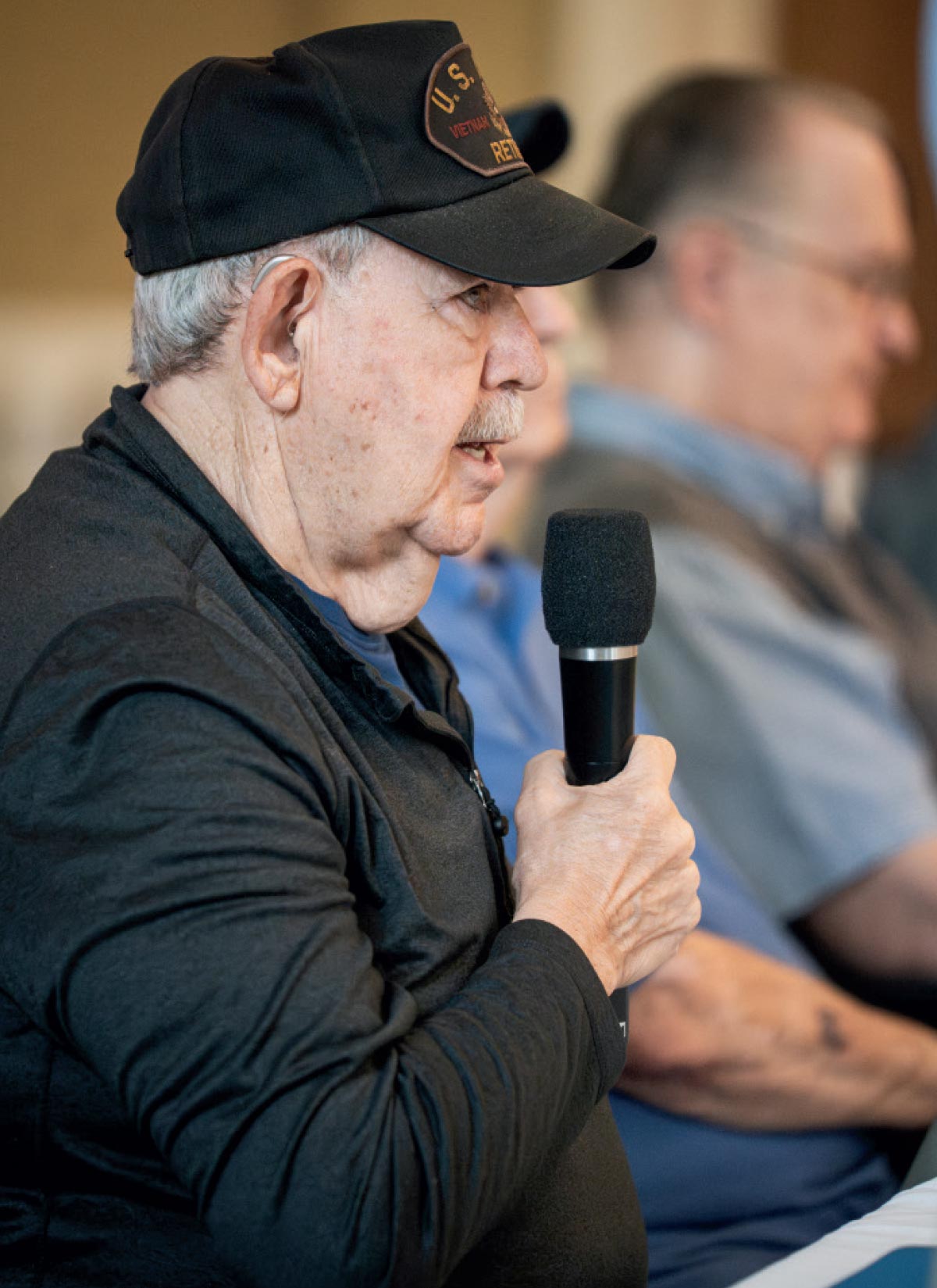
LeClerc, an airman with the U.S. Air Force, was one of several veterans who shared memories during the class of 1975’s UNH Reunion at an event that also featured alumni sharing their stories of life both on campus and in country during the Vietnam War era, from campus protests to combat.
Gov. John Lynch ’74 served as moderator, as veterans talked pointedly about their service and its lifelong effects. Many of the veterans were harassed once they returned to the States; one man was spit on by a stranger who called him a baby killer. Others felt ostracized, outcast and shunned. LeClerc pointed out that when he came home, “You couldn’t speak to your family about (Vietnam); you couldn’t speak to your friends about it. Because nobody wanted to hear it.”
“This is all very contrary to my understanding of free speech,” Wefers recalled thinking at the time. “It’s not a question of agreement with what they have to say; it’s a question of giving people the right to say what’s on their mind.”
In the end, the event concluded without incident, but it stands as a milestone not only in UNH’s history but in the legacy of Vietnam-era college protests, especially in the context of today’s campus activism.
“We certainly had good leaders on campus doing what needed to be done, saying what needed to be said, inviting people who needed to hear,” recalled Splaine. “But we also had it happening among New Hampshire older folk. Many of them aren’t here, and we need young people to come forward and fill in those ranks.”